
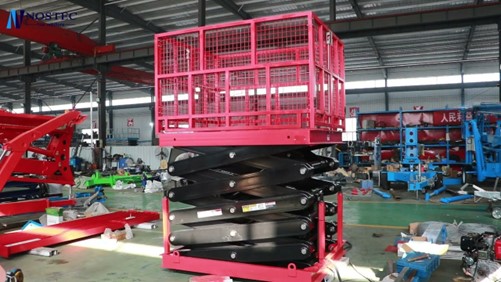
Efficient material handling is one of the biggest priorities for warehouses, factories, workshops, and logistics operations. Choosing the right lifting solution directly affects safety, productivity, and cost savings. Two of the most common options businesses consider are scissor lift tables and scissor goods lifts. While they might look similar at first glance, their design, purpose, and applications are quite different.
In this guide, we’ll break down the features, benefits, and differences between scissor lift tables and goods lifts to help you decide which solution best fits your operational needs.
Understanding Scissor Lift Tables
A scissor lift table, also known as a hydraulic lift table or scissor lift platform, is designed to raise or lower goods vertically with precision and stability. The mechanism uses crisscrossed steel supports (the “scissors”) powered by hydraulic cylinders. These tables can handle a capacity ranging from 500kg to 5 tons, with a maximum stroke of around 2 meters for standard models.
Applications of Scissor Lift Tables
- Moving heavy goods from one level to another within a warehouse or workshop.
- Acting as a workstation by adjusting items to an ergonomic height.
- Assisting in assembly lines where materials need to be frequently repositioned.
- Used as small goods elevators in pits for seamless loading/unloading.
Key Features of Scissor Lift Tables
- Laser cutting and powder coating for durability.
- Upper and lower landing limits and an emergency stop button for safety.
- Adjustable height to minimize manual strain.
- Emergency descend valve and safety trip bar for added protection.
- Available in manual, semi-electric, and electric versions.
Benefits
- Workplace Safety: Reduces lifting injuries by minimizing manual handling.
- Efficiency: Speeds up workflow, especially for repetitive loading/unloading tasks.
- Customization: Bespoke sizes, capacities, and heights tailored to your industry.
- Cost-Effectiveness: Long-term savings due to durability and reduced labor needs.
Nostec Lift, for example, manufactures premium hydraulic lift tables with structural warranties up to five years. Their models are built for tough industrial environments, with options ranging from compact trolleys to heavy-duty platforms.
Understanding Scissor Goods Lifts
A scissor goods lift is a larger and more robust version of the scissor lift concept, engineered to transport heavy goods, pallets, or materials between different floors. Unlike a lift table, goods lifts are typically pit-mounted, so the platform aligns flush with the floor for smooth loading.
These lifts often come with rails for stability, making them ideal for high-capacity vertical transportation in warehouses, showrooms, and logistics hubs.
Applications of Scissor Goods Lifts
- Moving pallets between ground and mezzanine floors.
- Transporting vehicles in garages and showrooms.
- Stage and event setups requiring smooth lifting of large platforms.
- Heavy-duty material handling in industrial plants.
Key Features of Goods Lifts
- Heavy-duty capacity with big platform sizes.
- Checkered platforms, removable guardrails, and control panels for safety.
- Emergency stop buttons and upper/lower landing limits.
- Options for customization: mesh enclosures, roller shutter doors, and ground installation if pits are not feasible.
Benefits
- Large Load Handling: Ideal for moving oversized or extremely heavy goods.
- Operational Convenience: Floor-level access ensures easy loading with forklifts or pallet jacks.
- Versatility: Can lift goods, vehicles, or even entire stage setups.
- Stability: Support rails ensure smooth and safe vertical movement.

Scissor Lift Tables vs. Goods Lifts: Key Differences
| Feature | Scissor Lift Table | Scissor Goods Lift |
| Capacity | 500kg to 5 tons | Up to 10 tons+ depending on design |
| Height | Usually up to 2m (higher models available) | Can reach multiple floors |
| Installation | Floor-mounted or pit-mounted | Usually pit-mounted for flush access |
| Best For | Workstations, production lines, light vertical transport | Heavy-duty transport, multi-level buildings, car lifts |
| Mobility | Can be mobile (trolley versions available) | Stationary, fixed installation |
| Cost | More affordable | Higher investment due to size & customization |
In short, scissor lift tables are best suited for ergonomic, workstation-level handling and short vertical movements, while goods lifts excel in heavy, high-volume, or multi-level material transport.
Other Scissor Lift Solutions
Beyond standard tables and goods lifts, Nostec Lift also provides specialized scissor lifting products:
- Scissor Lift Platforms: Designed for heavy goods and vehicles, often used in garages and events.
- Scissor Lift Trolleys: Portable, manual or electric models ideal for moving materials safely around workshops.
- Custom Solutions: Including cargo lifts, car turntables, and stage lifts tailored to client needs.
These options make it easier for businesses to find a solution that matches both their workflow and budget.
Why Choose Nostec Lift?
When investing in material handling equipment, reliability and support are just as important as the machine itself. Nostec Lift stands out for:
- Superior Quality and Durability – Strong materials and industrial-grade builds.
- Workplace Safety – Advanced safety features reduce risks.
- Customizable Solutions – Size, height, and capacity tailored to your requirements.
- Efficiency and Productivity – Faster handling means better throughput.
- Excellent Customer Support – Assistance with installation, maintenance, and troubleshooting.
- Cost-Effectiveness – Long service life and reduced manual labor costs.
Choosing the Right Lift for Your Needs
The right solution depends on your specific workplace requirements:
- If your operations involve frequent loading/unloading at adjustable heights or ergonomic workstation setups, a scissor lift table is the practical choice.
- If your business requires moving large volumes of goods between multiple floors or handling oversized loads, a scissor goods lift will provide the durability and capacity you need.
In many cases, businesses use both: lift tables for day-to-day handling and goods lifts for heavy, floor-to-floor transport.
Final Thoughts
Material handling efficiency can make or break workplace productivity. While scissor lift tables are perfect for smaller-scale, ergonomic lifting tasks, scissor goods lifts are the go-to option for moving heavy goods across multiple levels.
With Nostec Lift’s range of hydraulic lifting solutions—from compact trolleys to high-capacity goods lifts—you can enhance safety, save labor, and streamline operations, making it a cost-effective investment for long-term growth.