
As warehouses expand and operations become more time sensitive, one challenge continues to surface across industries: how to move heavy goods efficiently between floors without increasing risk, labor strain, or downtime.
For years, many facilities relied on ramps, forklifts, or improvised lifting solutions. While these methods worked in early stages, they rarely scale well. Congested aisles, safety incidents, damaged goods, and slower workflows eventually push warehouse managers to look for a more controlled and long term solution.
This is where 4 post cargo lifts are quietly becoming a standard choice in modern material handling design.
The Real Problem with Traditional Goods Movement
In most warehouses, vertical movement is not the main focus during initial planning. Space is allocated horizontally, and forklifts handle most transportation needs. As inventory grows, mezzanine floors are added to maximize storage, but the method of moving goods between levels often remains unchanged.
Over time, this creates hidden inefficiencies.
Forklifts struggle on ramps with heavy or uneven loads. Operators need extra space to maneuver safely. Traffic congestion increases during peak hours. Manual handling becomes more frequent, raising the risk of injury. What started as a workable setup slowly turns into a bottleneck.
Warehouses that reach this stage are not failing. They are simply outgrowing their original systems.
Why 4 Post Cargo Lifts Are Gaining Attention
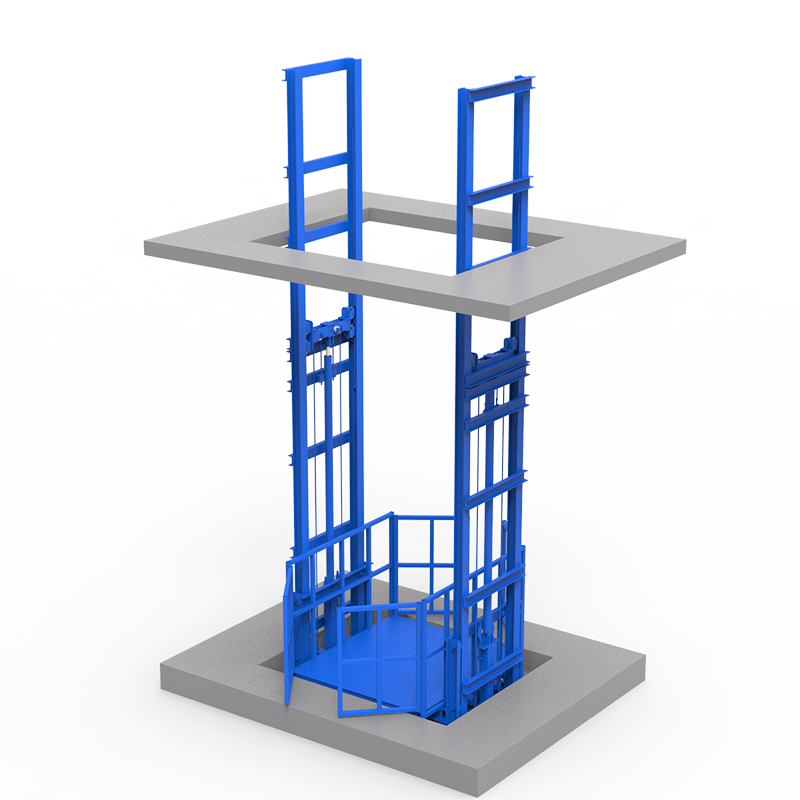
A 4 post cargo lift solves a very specific operational challenge: safe and efficient vertical transportation of heavy goods.
Unlike scissor lifts or temporary hoists, a 4 post hydraulic goods lift is designed for permanent installation and continuous industrial use. The four column structure ensures load balance and stability, even when lifting large platforms or uneven loads such as forklifts, machinery, or pallet stacks.
Instead of moving goods diagonally on ramps or repeating multiple forklift trips, materials move vertically in a single, controlled motion.
This shift alone improves safety, saves time, and reduces wear on equipment.
Built for Heavy Loads and Real Working Conditions
One of the defining features of a 4 post cargo lift is its capacity. These systems are not designed for light duty applications. Depending on the model, they can lift from 1000 kilograms up to 20 tons.
Large platform sizes allow warehouses to transport more goods in one cycle. This reduces waiting time, minimizes handling, and keeps workflows predictable. For facilities that handle bulk inventory or oversized items, this capability is critical.
The hydraulic lifting system ensures smooth operation under load, while low noise motors make the lift suitable for indoor and commercial environments.
Adapting to Different Warehouse Layouts
No two warehouses are exactly alike. Some allow pit installation, while others cannot accommodate structural changes. A modern cargo lift must adapt to these realities.
4 post cargo lifts can be installed with a pit to create a flush platform at ground level, simplifying loading and unloading. When a pit is not possible, ground installation with ramps provides an effective alternative.
Additional options such as mesh enclosures, floor mesh protection, and roller shutter doors help tailor the lift to safety regulations and operational needs. This flexibility allows warehouses to upgrade without major redesigns.
Safety Systems That Matter in Daily Use
In industrial environments, safety features must work consistently, not just exist on specification sheets.
A well designed 4 post cargo lift includes multiple layers of protection. Emergency stop buttons allow immediate response in critical situations. Safety control voltage systems use low voltage power for operation, reducing electrical risk.
Hydraulic safety valves stop the lift instantly if a hose fails. Safety interlocking systems ensure the lift cannot operate unless platform and landing doors are fully closed. Guardrails prevent goods from shifting or falling during movement.
Electromagnetic locks keep doors secure while the lift is in operation, and calling devices allow controlled access from different levels.
Together, these systems create a lifting environment that supports both productivity and worker safety.
Where These Lifts Are Making the Biggest Impact
While warehouses and distribution centers are the primary users, 4 post cargo lifts are increasingly used across multiple sectors.
Factories and industrial plants rely on them to move raw materials, finished products, and equipment between floors. Retail storage facilities use them to manage backroom logistics efficiently. Hotels and commercial buildings install cargo lifts for service operations where goods must move discreetly and safely.
Residential and mixed use buildings also benefit when heavy items need to be transported during maintenance or renovation work.
Anywhere vertical movement is frequent and loads are heavy, a 4 post cargo lift becomes a practical solution.
The Role of Nostec Lift in Modern Cargo Lift Solutions
Behind every reliable cargo lift is a manufacturer that understands real world industrial challenges.
Nostec Lift, part of Jinan Nostec Equipment Co., Ltd., specializes in cargo lifts, scissor lift tables, car lifts, car turntables, aerial lifts, wheelchair lifts, and customized lifting solutions. The company focuses on designing equipment that balances performance, safety, and adaptability.
Nostec Lift cargo systems are engineered for warehouses and industrial environments where reliability is not optional. From standard configurations to customized options, the emphasis remains on durability, smooth operation, and compliance with safety expectations.
With installations across different countries and years of experience in material handling solutions, Nostec Lift continues to support businesses looking to improve vertical logistics without compromising safety or efficiency.
Choosing the Right 4 Post Cargo Lift Model
Selecting the correct lift requires more than choosing a weight rating. Factors such as lifting height, platform size, pit depth, installation space, and power requirements all influence the final decision.
Smaller warehouses may require compact platforms with moderate capacity, while heavy industrial sites benefit from larger platforms and higher load ratings. Power consumption and available electrical infrastructure also play a role.
Working with an experienced manufacturer helps ensure the lift integrates smoothly into daily operations rather than creating new constraints.
A Long Term Perspective on Efficiency
Installing a cargo lift is not a short term upgrade. It is a long term investment in workflow stability, safety, and scalability.
Warehouses that adopt vertical lifting solutions often see reduced labor strain, fewer handling related damages, and improved operational speed. Over time, the lift becomes a core part of the facility’s infrastructure rather than an auxiliary tool.
As storage demands continue to grow vertically, controlled vertical movement becomes essential rather than optional.
Final Thoughts
The growing adoption of 4 post cargo lifts reflects a broader shift in warehouse design thinking. Instead of adapting operations around outdated movement methods, facilities are investing in systems built for modern logistics.
With the right design, safety features, and manufacturer support, a 4 post hydraulic cargo lift offers a reliable path toward safer, faster, and more efficient material handling.
FAQs
What is a 4 post cargo lift used for?
A 4 post cargo lift is used to transport heavy goods vertically between floors. It is commonly installed in warehouses, factories, distribution centers, and industrial buildings where safe and efficient lifting is required.
How much weight can a 4 post cargo lift handle?
Depending on the model, these lifts can handle loads from 1000 kilograms up to 20 tons. Capacity selection depends on the type of goods and operational requirements.
Can a cargo lift be installed without a pit?
Yes. If a pit is not possible, the lift can be installed at ground level with loading ramps. This allows flexibility for existing buildings.
Are 4 post cargo lifts safe for daily industrial use?
Yes. When properly designed and installed, they include safety features such as emergency stop buttons, safety interlocking, hydraulic safety valves, guardrails, and low voltage control systems.
What industries use Nostec Lift cargo solutions?
Nostec Lift solution is used in warehouses, factories, distribution centers, retail storage, hotels, commercial buildings, and industrial plants.
Can the lift be customized for specific needs?
Yes. Options such as mesh enclosures, roller shutter doors, floor mesh protection, touch screen controls, and motor cover boxes can be added based on site requirements.
How long does installation typically take?
Installation time depends on lift size, site conditions, and configuration. An experienced manufacturer can provide accurate timelines during planning.
How do I choose the right cargo lift model?
The right model depends on load capacity, lifting height, platform size, installation space, and power availability. Consulting with the manufacturer helps ensure the correct selection.