
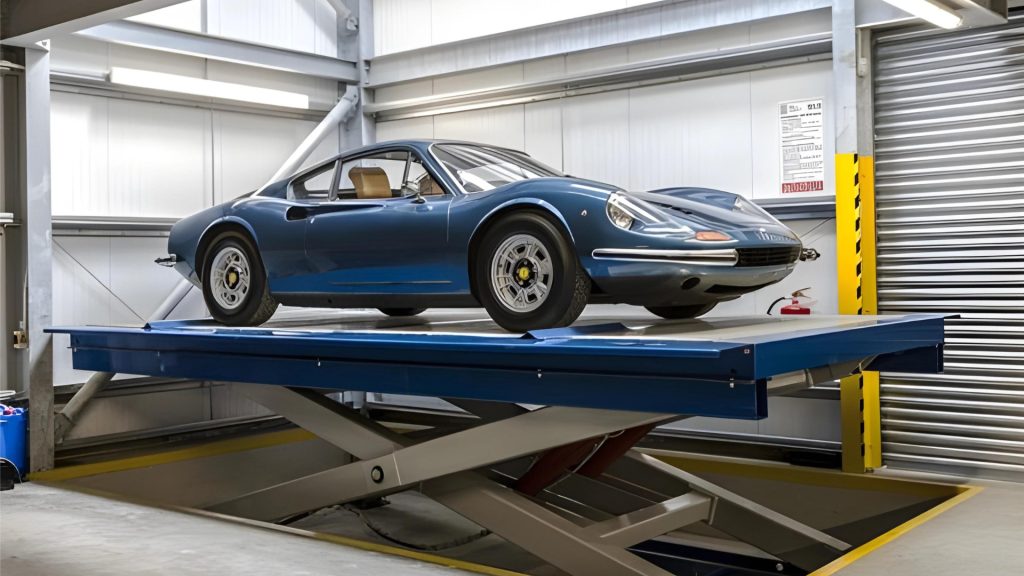
Buying a car lift in garage residential setups is easily one of the best upgrades a home mechanic, car collector, or busy family can make. It doubles your parking space without paying for expensive concrete work or building additions. But setting up a car lift in garage residential properties takes more than just picking out a model online and plugging it into the nearest wall socket.
We talk to homeowners every single week across suburbs like Al Barsha in Dubai, quiet residential streets near Houston, and custom housing developments outside Melbourne. The most common story goes something like this: someone orders a shiny new 2-post or 4-post car lift, the freight truck delivers it to the driveway, and suddenly everyone realizes the garage door track blocks the lift post by two inches. Or worse, the local building inspector stops by and asks for structural engineering drawings that nobody prepared.
We built this clear guide to help you get every measurement, permit requirement, and electrical connection right the first time.
1. Ceiling Height: The Golden Formula
The biggest mistake people make with a car lift in garage residential projects is guessing the ceiling height. You cannot just measure from the floor to the drywall ceiling and call it a day.
How to Calculate Clear Height Correctly
To park one vehicle on top of another safely, you need to use this simple math formula:
- Vehicle 1 Height (Bottom Car) + Vehicle 2 Height (Top Car) + 12 Inches (Platform Thickness & Lock Clearance) = Minimum Ceiling Clearance.
For example, if you want to park a daily sedan (58 inches tall) under a classic sports car or small SUV (56 inches tall), your basic clearance needed is:
- 58 inches + 56 inches + 12 inches = 126 inches (which is exactly 10.5 feet or 3.2 meters).
If you plan to stack two full-size SUVs or light pickup trucks, you will likely need 14 feet (about 4.2 meters) of clear vertical space.
Watch Out for Garage Doors and Openers
Your drywall ceiling might be 11 feet high, but standard garage door openers hang down by 12 to 18 inches right over your car hood. Standard garage door tracks also curve inward horizontally into the room.
- High-Lift Track Conversion: Modify your garage door tracks so the door travels straight up along the wall before turning near the roof line.
- Wall-Mount Openers: Replace overhead chain-drive openers with side-mounted jackshaft operators (like LiftMaster units) that mount directly on the torsion bar beside the door.
2. Concrete Slab Requirements: Thickness and Strength
Your car lift is only as safe as the concrete underneath it. You are trusting a few steel base plates to anchor thousands of pounds of steel and automotive machinery overhead.
| Lift Type | Minimum Slab Thickness | Concrete PSI Rating | Anchoring Style |
| 2-Post Parking / Storage Lift | 4.0 to 6.0 Inches (100 – 150mm) | 3,000 PSI or higher | Heavy expansion anchor bolts in solid concrete. |
| 4-Post Parking / Storage Lift | 4.0 Inches (100mm) | 2,500 to 3,000 PSI | Freestanding or light anchor bolts for stability. |
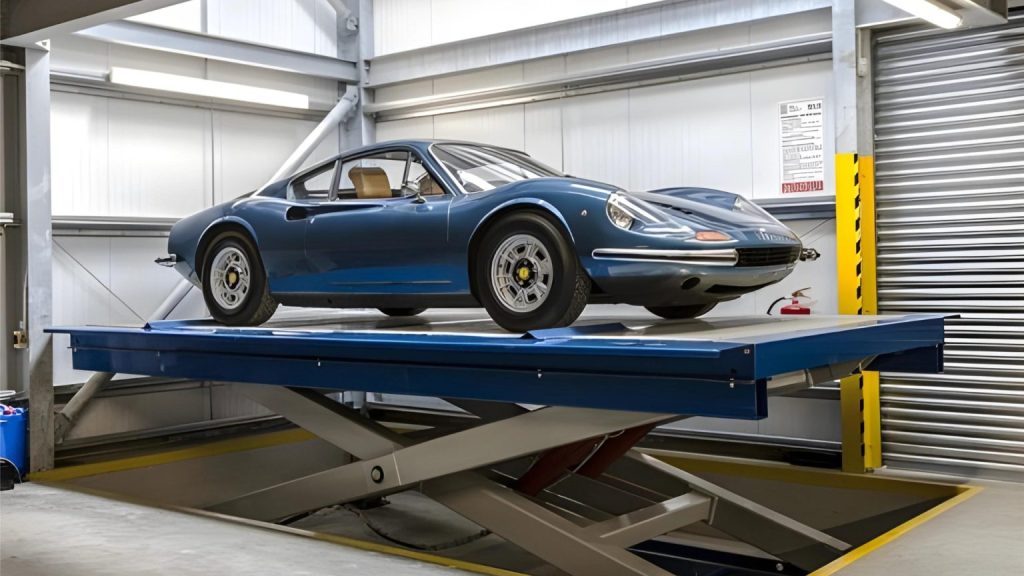
| Scissor Parking Lift | 4.0 to 5.0 Inches (100 – 125mm) | 3,000 PSI | Surface mounted or recessed flush into a pit. |
Critical Concrete Warning Signs
- Avoid Post-Tensioned Slabs: If your residential garage floor slab is post-tensioned (common in newer housing communities), drilling into the concrete can sever steel tension cables, causing structural failure. Check for stamped warnings near your garage entrance.
- Mind the Expansion Joints: Base plates should never be installed within 4 to 6 inches of a concrete control joint or slab crack.
3. Electrical Requirements: Voltage, Amps, and Breakers
A car lift in garage residential properties runs on an electro-hydraulic power unit. You need to make sure your home breaker panel can handle the electrical draw without tripping circuit breakers every time you press the UP button.
110V/120V vs 220V/240V Systems
- 110V Single-Phase Units: Common on lighter 4-post hobby lifts and 2,000 kg scissor lifts. They plug into standard outlets, but lifting a vehicle takes about 50 to 75 seconds.
- 220V/240V Single-Phase Units: Standard for heavy-duty 2-post lifts, 4-post parking lifts, and residential car elevators. They lift vehicles much faster (usually 30 to 45 seconds) and run cooler.
Wiring Checklist for Electricians
- Install a dedicated 20-Amp or 30-Amp circuit breaker depending on motor size (typically 2.2 kW to 3.0 kW).
- Ensure your garage has a 24V DC safety control circuit for user-facing push buttons to prevent electrical shock risks.
- For outdoor parking lifts, make sure motor enclosures and electrical control boxes have waterproof covers.
4. Permits, Zoning, and HOA Regulations
Before you schedule a installation team, check your local town codes and neighborhood rules. Skipping this step can lead to unneeded fines or orders to dismantle your equipment.
Building Permits
In many jurisdictions, freestanding car lifts for personal vehicle storage do not require a separate building permit because they are considered temporary mechanical equipment. However, if your installation requires modifying structural roof trusses, digging concrete pits, or running new high-voltage sub-panels, you will likely need standard building and electrical permits.
HOA Rules and Height Limits
Homeowner associations often have strict rules about vehicles visible above fence lines. If you plan to use an outdoor car parking lift in your driveway, verify whether your HOA allows elevated vehicle storage.
Key Features Offered by Nostec Lift
At Nostec Lift, we manufacture a broad line of residential parking lifts, 2-post storage lifts, 4-post storage systems, scissor lifts, and vehicle turntables designed specifically for residential garages. Every system is built using heavy laser-cut steel framing and powder-coated finishes to deliver long-term performance.
- Mechanical Anti-Fall Protection: Multi-position safety locks hold the platform securely at your chosen height.
- Hydraulic Hose-Burst Valves: Built-in safety valves lock hydraulic pressure instantly if a hose experiences damage.
- Custom Footprints and Colors: We tailor platform dimensions, lifting height, and RAL powder-coating shades to fit your specific residential garage space.
- Global Certification: Engineered to international safety standards, backed by detailed 3D installation drawings and full technical support.
Ready to Upgrade Your Garage Space?
Adding a car lift in garage residential setups double your parking capacity, protects your favorite vehicles, and turns your garage into a clean, organized space. Our engineering team at Nostec Lift has helped homeowners in over 105 countries plan and install high-quality lifting equipment.
Send us your garage ceiling height, floor dimensions, and vehicle types today. We will send you custom layout drawings and a factory-direct quote to help you get started!