
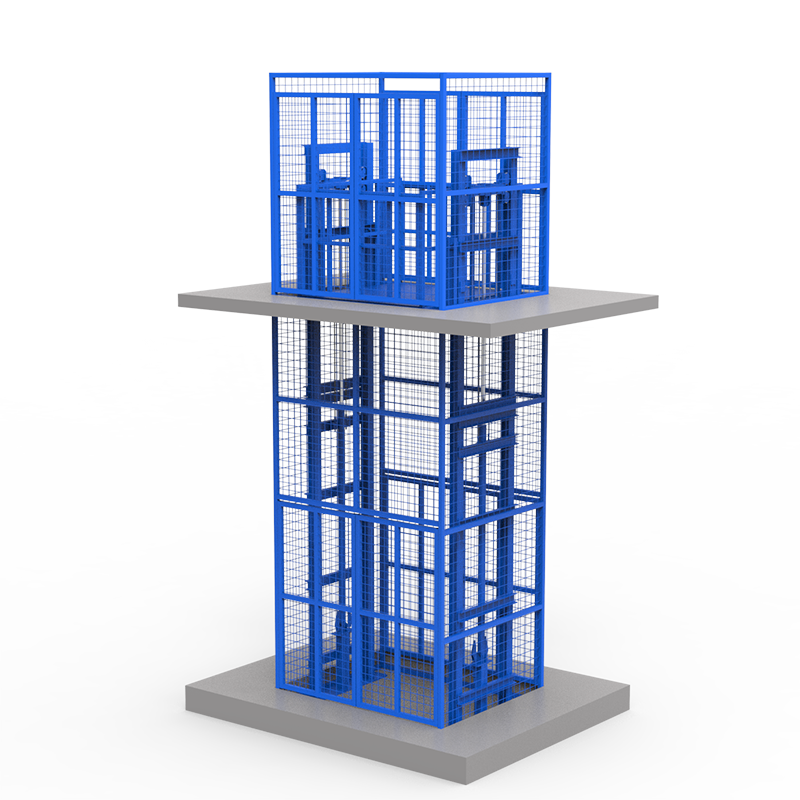
In today’s fast-moving industrial and logistics landscape, vertical material movement is no longer a luxury—it is a necessity. Warehouses are expanding upward, factories are becoming more compact, and distribution centers are handling heavier loads with tighter timelines. In this environment, hydraulic cargo lifts have emerged as one of the most reliable, cost-effective, and durable solutions for moving goods safely between floors.
Unlike passenger elevators, cargo lifts are engineered with a singular focus: strength, stability, and efficiency. Whether used in warehouses, factories, retail stores, or even residential settings, hydraulic cargo lifts simplify operations while significantly improving productivity and safety.
This in-depth guide explores hydraulic cargo lift solutions from a modern, global perspective—covering their working principles, structural designs, configurations, safety systems, applications, and how to choose the right lift for your facility.
What Is a Hydraulic Cargo Lift?
A hydraulic cargo lift is a vertical lifting system designed specifically for transporting goods, materials, and equipment between different floor levels. Powered by a hydraulic drive system, these lifts are known for their smooth operation, high load capacity, and long service life.
Unlike traditional elevators, cargo lifts:
- Do not require complex overhead machinery
- Can be installed with minimal civil work
- Are highly customizable for different site conditions
This makes them an ideal solution for industrial and commercial environments where durability and performance matter more than aesthetics.
Why Hydraulic Cargo Lifts Are Widely Preferred
Hydraulic cargo lifts have become a popular choice across global markets due to their practical advantages.
Key Benefits at a Glance
- Cost-effective installation and operation
- Simple control and user-friendly operation
- High load-bearing capability
- Stable vertical movement
- Low maintenance requirements
- Flexible design options
For businesses seeking a long-term lifting solution without excessive operational costs, hydraulic cargo lifts deliver exceptional value.
How Hydraulic Cargo Lifts Work
The core of a hydraulic cargo lift is its hydraulic power system. When the lift is activated, hydraulic oil is pumped into a cylinder, pushing a piston upward. This motion raises the lift platform smoothly and steadily. To descend, the system releases the oil back into the reservoir in a controlled manner.
This mechanism provides:
- Smooth lifting motion
- Strong lifting force
- High reliability under heavy loads
Because the system relies on fluid pressure rather than complex mechanical gearing, wear and tear are significantly reduced.
Structural Configurations of Cargo Lifts
Hydraulic cargo lifts are available in multiple structural formats to suit different building layouts and load requirements.
2-Post Cargo Lifts: Space-Efficient and Practical
2-post cargo lifts are wall-mounted or guide-rail supported systems designed for moderate loads and limited space.
Key Characteristics
- Compact structure
- Lower installation footprint
- Suitable for medium load capacities
Ideal Applications
- Small to mid-size warehouses
- Retail backrooms
- Workshops and storage areas
These lifts are often chosen where space is limited but vertical transport is essential.
4-Post Cargo Lifts: Maximum Stability for Heavy Loads
4-post cargo lifts use four vertical columns to support the platform, offering superior stability and load distribution.
Advantages
- Higher load capacity
- Excellent structural balance
- Suitable for frequent heavy-duty operation
Common Use Cases
- Industrial plants
- Large warehouses
- Manufacturing facilities
When strength and durability are top priorities, 4-post cargo lifts are the preferred choice.
Fully Caged Cargo Lifts: Enhanced Safety and Control
Fully caged cargo lifts enclose the lifting platform within a protective structure, ensuring maximum safety during operation.
Safety Benefits
- Prevents accidental access during movement
- Protects goods from falling
- Ideal for multi-floor operations
These lifts are commonly used in environments with strict safety regulations or mixed personnel and goods traffic.
Platform Design and Customization
One of the biggest strengths of hydraulic cargo lifts is their adaptability. Platforms can be customized to match specific operational needs.
Customization Options Include:
- Platform width and depth
- Open or mesh flooring
- Loading ramps for pallet trucks
- Mesh cabins or fully enclosed cages
Customization ensures seamless integration into existing workflows.
Advanced Control and Safety Systems
Modern hydraulic cargo lifts are equipped with advanced electrical and safety features designed to protect both operators and cargo.
Standard Safety and Control Features
- PLC control system
- 24V DC control circuit
- Door interlock mechanisms
- Emergency stop buttons
- Emergency lowering valves
- Upper and lower limit switches
These systems ensure precise control and safe operation under all conditions.
Operational Safety: Designed for Industrial Demands
Safety is a critical consideration in cargo lift design. Hydraulic cargo lifts are built to stop immediately in case of malfunction and can be halted at any point during operation.
Additional safety advantages include:
- Controlled descent during power failure
- Secure gate systems
- Overload protection
This makes them suitable for environments with heavy and valuable goods.
Installation Flexibility
Hydraulic cargo lifts can be installed in various ways depending on site conditions.
Installation Options
- Floor-mounted systems
- Pit-mounted platforms
- External or internal shaft installation
Because they do not require machine rooms or deep pits, installation is faster and more cost-efficient compared to traditional elevators.
Cargo Lift Applications Across Industries
Hydraulic cargo lifts are used in a wide range of industries due to their versatility.
Warehouses and Distribution Centers
Enable fast and efficient vertical transport of pallets and goods.
Manufacturing Plants
Support movement of raw materials, components, and finished products.
Retail Stores and Shopping Centers
Facilitate stock movement between storage and sales floors.
Hotels and Commercial Buildings
Used for service goods, laundry, and equipment transport.
Residential and Private Use
Ideal for villas or homes requiring heavy item transport between floors.
Indoor and Outdoor Use
Hydraulic cargo lifts can be designed for both indoor and outdoor environments.
Indoor Benefits
- Compact footprint
- Quiet operation
- Clean hydraulic systems
Outdoor Enhancements
- Weather-resistant coatings
- Sealed electrical components
- Durable structural materials
This adaptability makes them suitable for global climates, including high-temperature and humid regions.
Load Capacity and Performance Range
Hydraulic cargo lifts are available in a wide range of load capacities—from light-duty applications to extremely heavy industrial use.
This scalability allows businesses to:
- Start with smaller systems
- Upgrade as operational demands grow
Choosing the right capacity ensures efficiency without unnecessary cost.
Maintenance and Long-Term Reliability
Hydraulic cargo lifts are known for their durability and long service life. Routine maintenance is straightforward and typically includes:
- Hydraulic oil inspection
- Electrical system checks
- Lubrication of moving components
- Safety device testing
With proper care, these lifts operate reliably for many years.
How to Choose the Right Cargo Lift
Selecting the correct hydraulic cargo lift depends on several factors.
Key Selection Criteria
- Load weight and size
- Required lift height
- Available installation space
- Indoor or outdoor use
- Frequency of operation
Consulting with experienced engineers ensures the lift is optimized for your site.
Global Demand for Hydraulic Cargo Lifts
As warehouses grow taller and factories become more automated, demand for hydraulic cargo lifts continues to rise worldwide. Businesses across logistics, manufacturing, and retail sectors increasingly rely on these systems to improve efficiency and workplace safety.
This global adoption highlights their reliability and adaptability across different industries and regions.
The Future of Cargo Lift Solutions
Innovation in cargo lift technology focuses on:
- Smarter control systems
- Energy-efficient hydraulic units
- Enhanced safety automation
- Modular and scalable designs
These developments ensure hydraulic cargo lifts remain a future-proof investment.
Final Thoughts
Hydraulic cargo lift solutions offer a perfect balance of strength, simplicity, and efficiency at nosteclift.com. Designed to handle heavy loads with ease, they improve workflow, enhance safety, and optimize vertical space across a wide range of industries.
Whether you operate a warehouse, factory, retail facility, or industrial plant, investing in the right hydraulic cargo lift can transform how goods move within your building—saving time, reducing labor strain, and supporting long-term growth.
In a world where efficiency defines success, hydraulic cargo lifts stand out as a reliable foundation for modern vertical logistics.